Home › Places › Wat Phanan Choeng
Wat Phanan Choeng Worawihan: A Temple Older Than Ayutthaya, Home of Luang Pho To
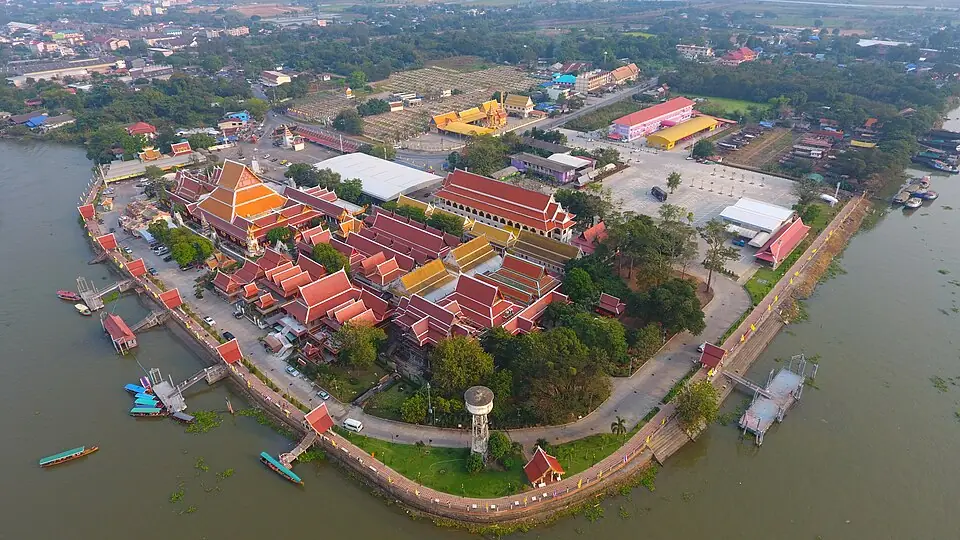
Wat Phanan Choeng Worawihan stands on the Chao Phraya River, across from the southeastern corner of Ayutthaya's city island. It is one of the few temples with evidence that it is older than Ayutthaya itself: the royal chronicles record that its great Buddha image was made a full 26 years before the city was founded. Today Luang Pho To is still revered by Thais and Thais of Chinese descent alike, and the temple remains as busy as ever, like a water gate to the old city.
This place through the eras
The Luang Prasoet Chronicle records that the great Buddha image here was made in 1324, 26 years before King Ramathibodi I (King U Thong) founded the city. A Chinese community is believed to have lived along the river south of the city island from early on. The Northern Chronicle tells a legend that the temple was built where Princess Soi Dok Mak was cremated.
By Naresuan's time the great riverside Buddha was already more than 200 years old. It sat on the route seagoing trading ships took before reaching the capital, close to where foreigners were beginning to settle: the Portuguese, the Japanese, and the Dutch merchants who arrived in 1604. Even so, no record has been found of any event in Naresuan's reign taking place at this temple itself.
A few years before King Narai's reign, in 1655, the Dutch physician Gijsbert Heeck noted that the Buddha image here was huge and beautifully gilded. The temple stood amid the international trading quarter south of the capital, among the Chinese, Dutch and Japanese communities.
Tradition holds that shortly before the city fell, tears flowed from the eyes of the great Buddha image. After the fall, the temple was restored several more times in the Rattanakosin (Bangkok) period, and it has remained an active temple with monks to this day.
A royal temple where people come to pay respect to Luang Pho To (Phra Phuttha Trai Rattana Nayok), about 19 m tall and known to the Chinese as Sam Po Kong. It has a pier on the Chao Phraya River and is a favourite stop for boat tours around the island.
Origins and name
There is no evidence of who built Wat Phanan Choeng. However, the Luang Prasoet Chronicle (the Luang Prasoet Aksoranit version of the Royal Chronicles of the Old Capital), one of the oldest surviving chronicles, records that in 1324 a great Buddha image called Phra Chao Phanaeng Choeng was made. That is a full 26 years before Ayutthaya was founded in 1351.
The word phanaeng choeng means sitting cross-legged, which matches the great seated Buddha in the wihan (assembly hall). Over time the name drifted to Phanan Choeng. The Northern Chronicle, a later compilation of legends, calls the temple Wat Chao Phra Nang Choeng.
The legend in the Northern Chronicle tells how Princess Soi Dok Mak, a daughter of the Emperor of China, came by ship to marry King Sai Nam Phueng. Hurt that the king did not come in person to receive her, she held her breath until she died, and King Sai Nam Phueng built a temple on the spot where she was cremated. This is a legend that helps explain the Chinese community's bond with the temple, not a record that can be confirmed historically.
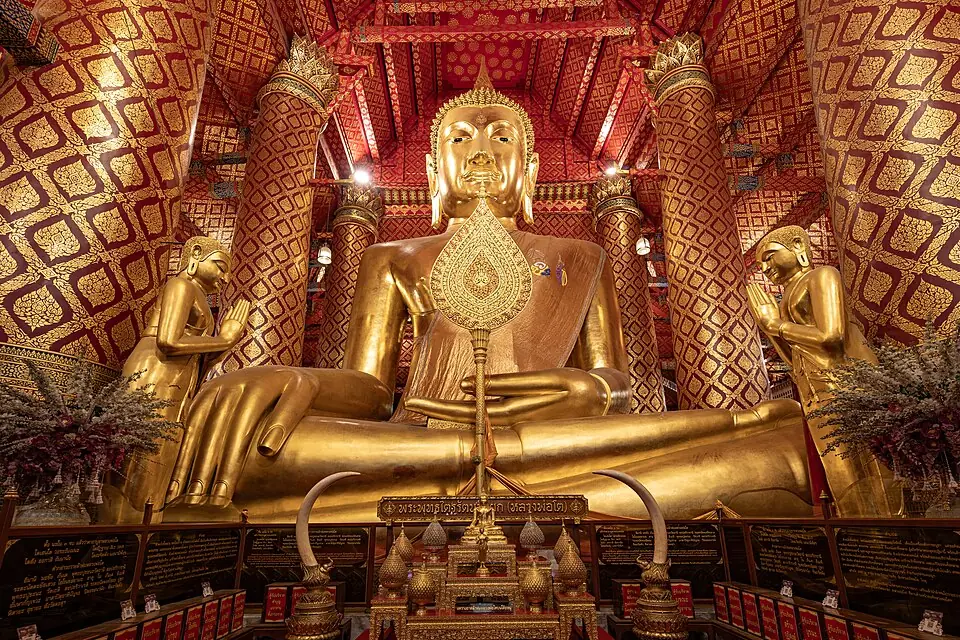
Luang Pho To, the great Buddha by the river
The principal image in the wihan is a Buddha in the 'subduing Mara' (Maravijaya) posture, built of brick and stucco and finished in lacquer and gold leaf. It measures about 14 metres across the lap and stands about 19 metres tall including the flame finial on the head. Thais call it Luang Pho To, while Chinese and Thais of Chinese descent call it Sam Po Kong.
The image was repaired many times throughout the Ayutthaya period. In 1854 King Mongkut (Rama IV) had it restored and gave it the name Phra Phuttha Trai Rattana Nayok. Then in December 1901 a fire damaged the temple and the image, and King Chulalongkorn (Rama V) had them repaired, with the work completed the following year.
The ubosot (ordination hall) also holds several other old Buddha images. Some scholars suggest that two of them are Sukhothai-style works that had once been encased in plaster, their gilded metal only revealed when they were cleaned at a later date.
A riverside temple of many nations
Some scholars believe Chinese settlers had lived south of the city island, around Bang Kracha, since before the city was founded, which would make Wat Phanan Choeng a spiritual centre of the Chinese community for a very long time. In the Ayutthaya period a ferry also ran from in front of the temple across to the city island near Hua Saraphi, one of many ferry crossings around the capital.
As more foreign merchants arrived, the riverside south of the temple became home to foreign communities: the Dutch, the Japanese, and the Portuguese on the opposite bank. The Dutch physician Gijsbert Heeck, who visited in 1655, wrote with admiration about the sheer size of the Buddha image here.
What is its connection to King Naresuan?
As far as can be verified, no chronicle or contemporary record has been found that describes an event in the reign of King Naresuan the Great (1590–1605) taking place at Wat Phanan Choeng itself. This site therefore does not list the temple as a place associated with him.
But if you ask what this place was like in his time, the answer is that the temple already existed and was more than 200 years old. It stood on the waterway trading ships passed before reaching the capital. Across the river was Phet Fortress, guarding the harbour; not far away was the Portuguese community, whose musketeers fought in the wars of that era; and in 1604 the first Dutch merchants arrived and were received in audience by Naresuan.
Wat Phanan Choeng through the eras
Picture the same spot on the map while the eras change around it.
- Early Ayutthaya (1351–1488): according to the chronicles, the great Buddha image had already stood here since 1324, and this stretch of riverbank is believed to have had a Chinese community.
- Naresuan's era (1548–1605): an old temple beside the boat route into the capital, near the growing foreign quarters.
- King Narai's era (1656–1688): in the middle of the international trading quarter; foreign visitors often mentioned the great Buddha image.
- The fall of Ayutthaya in 1767: tradition says tears flowed from Luang Pho To's eyes before the city fell.
- Today: a royal temple where people still come to worship every day.
Getting there and visiting
You can come by road, crossing the bridge from the city island to the east side, or on one of the boat tours around the island, which often stop at the pier in front of the temple. It gets crowded on holidays and during Chinese festivals; for a relaxed visit, come on a weekday morning.
Around April each year the temple holds a ceremony to bathe Luang Pho To and drape him in a new robe. If you would like to attend, check the schedule with the temple before you travel.
Where historians still disagree
- When the Buddha image was made: the Luang Prasoet Chronicle gives BE 1867 (1324), but some sources give BE 1877 (1334), and the Northern Chronicle tells it as the legend of King Sai Nam Phueng, with no date that can be checked.
- A city of Ayothaya before Ayutthaya: some use Phra Chao Phanaeng Choeng as evidence that an older city lay east and south of the city island, but an article in the Journal of Ayutthaya Studies (2025) argues that traces of settlement in the eastern area before the city was founded are still scarce, and that no archaeological evidence of such a city has yet been found.
Visiting information
- Opening hours: 08:00–17:00 (as of 2025)
- Dress modestly: this is an active temple with monks and worshippers throughout the day.
- It gets crowded on holidays and during Chinese festivals, so allow extra time for parking.
- If you come on a boat tour, agree on how long the stop will be before you go ashore.
Opening hours and admission fees may change, so please check before you go.
Frequently asked questions
When was Wat Phanan Choeng built?
The exact year the temple was founded is unknown, but the Luang Prasoet Chronicle records that the great Buddha image was made in 1324, 26 years before Ayutthaya was founded.
How big is Luang Pho To at Wat Phanan Choeng?
About 14 metres across the lap and about 19 metres tall including the flame finial on the head. Its royally bestowed name is Phra Phuttha Trai Rattana Nayok.
Is Wat Phanan Choeng connected with King Naresuan?
No record has been found of an event in King Naresuan's reign taking place at this temple itself. In his time the temple already existed and stood beside the boat route into the capital.
- Wat Phanan Choeng - Ayutthaya Historical Research
- Wat Phanan Choeng Worawihan - Phra Nakhon Si Ayutthaya Provincial Tourism Information Centre (in Thai)
- Wat Phanan Choeng Worawihan, Ayutthaya: Making a Wish to Luang Pho To, Sam Po Kong - TrueID (in Thai)
- Ayothaya East of Ayutthaya's City Island: Fact or Myth? - Journal of Ayutthaya Studies (in Thai)
- Wat Phanan Choeng - Wikipedia
Last updated 10 November 2026