Home › Travel & food › Ayutthaya in Two Days and One Night: Every Era of the City
Ayutthaya in Two Days and One Night: Every Era of the City
With two days, Ayutthaya becomes more than a trip to photograph temples: it is a walk through a city that kept changing over 417 years. Day one stays on the city island, the centre of the kingdom from its founding to the time of King Naresuan. Day two heads off the island to temples older than the capital itself, the foreign settlements and the temples on the eastern side, covering all five eras on this site's map.
Itinerary
- Day 1
- 8:301
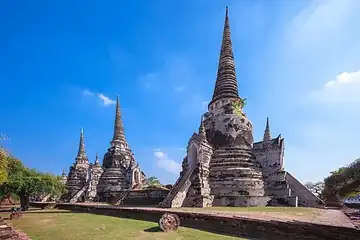 Wat Phra Si Sanphet Map
Start at the heart of the city island. According to tradition, this was once King U Thong's palace, before King Borommatrailokkanat gave it over to become a temple and built a new palace to the north.
- 9:302
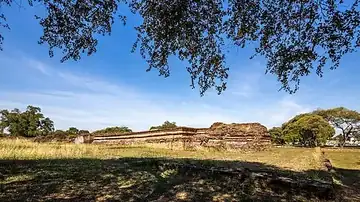 Ancient Royal Palace Map
Walk to the grounds of the Ancient Royal Palace next door, the centre of the royal court through many reigns, including King Naresuan's.
- 10:153
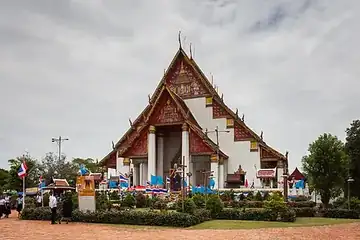 Wihan Phra Mongkhon Bophit Map
Stop at Wihan Phra Mongkhon Bophit, south of Wat Phra Si Sanphet, to pay your respects to the huge Buddha image inside the wihan (assembly hall).
- 11:004
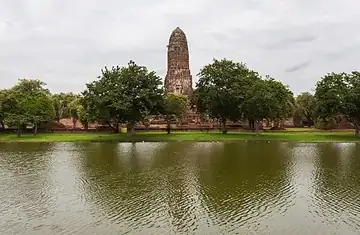 Wat Phra Ram Map
Walk along Bueng Phra Ram (the Phra Ram lake) to Wat Phra Ram and see its main prang (Khmer-style tower) standing beside the water.
- 12:00Pa Lek Boat Noodles (ก๋วยเตี๋ยวเรือป้าเล็ก)
Lunch is small bowls of boat noodles near Wat Mahathat. The shop is closed on Wednesdays; if you are there on a Wednesday, switch to Uan Ja Noodle, which is open every day.
- 13:155
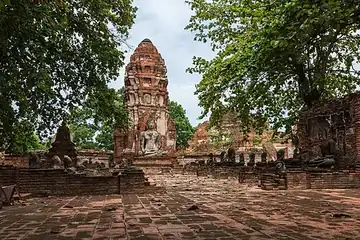 Wat Mahathat Map
See the base of the great prang and the Buddha head held in the tree roots. When taking photos, crouch down so that you are lower than the Buddha's head.
- 14:156
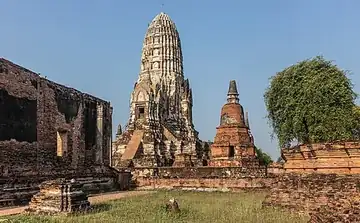 Wat Ratchaburana Map
Cross the road to Wat Ratchaburana. A large hoard of gold objects was once found in the crypt of its prang; it is now displayed at the Chao Sam Phraya National Museum.
- 15:307
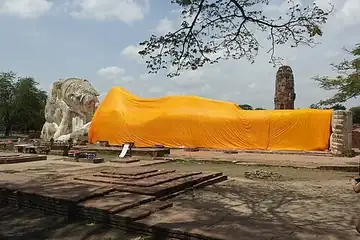 Wat Lokayasutharam Map
Drive to the west side of the island to see the huge open-air reclining Buddha at Wat Lokayasutharam.
- 16:158
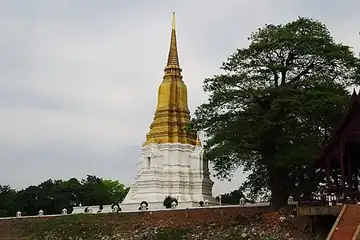 Suriyothai Chedi Map
The riverside chedi commemorating Queen Suriyothai, who died in the war of 1548, which is where the King Naresuan era begins on the map.
- 17:159
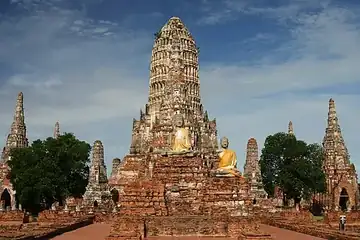 Wat Chaiwatthanaram Map
Cross the river to Wat Chaiwatthanaram, built in the reign of King Prasat Thong, the father of King Narai. The light is at its most beautiful close to sunset.
- 18:30Ayutthayarom
Dinner by the river on the same bank as Wat Chaiwatthanaram. The restaurant is open until 20:00; afterwards, head back to your accommodation on the island.
- Day 2
- 7:30Hua Ro Market (ตลาดหัวรอ)
On the morning of day two, find a local-style breakfast at Hua Ro Market.
- 8:3010
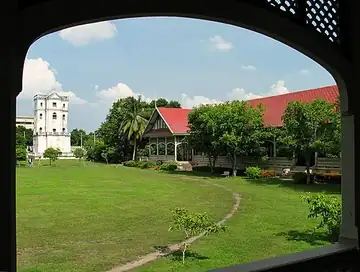 Chandra Kasem Palace Map
Chandra Kasem Palace, where Naresuan lived when he was crown prince. It was burned in 1767 and rebuilt in the reign of King Rama IV. Check the museum's opening days first.
- 9:4511
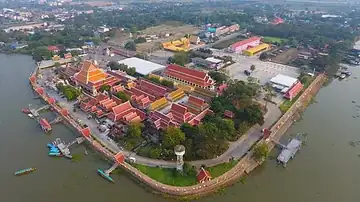 Wat Phanan Choeng Map
Drive to the southeast. According to the royal chronicles, the great Buddha image of Wat Phanan Choeng was made before Ayutthaya was founded.
- 10:4512
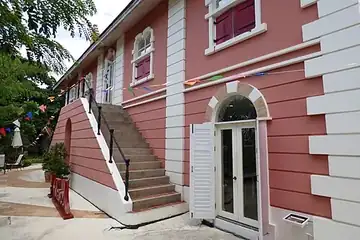 Baan Hollanda Map
Baan Hollanda tells the story of the Dutch East India Company, whose first mission arrived in 1604 and had an audience with King Naresuan.
- 11:3013
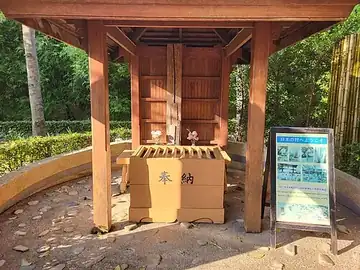 Japanese Village Map
The Japanese Village, home of the Japanese community on the Chao Phraya River, now has an exhibition about the Japanese in Ayutthaya.
- 12:1514
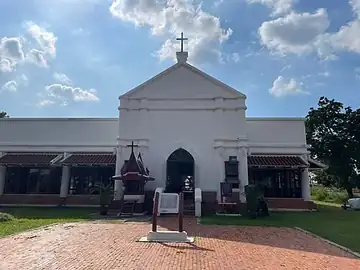 Portuguese Settlement Map
The Portuguese Settlement. Portuguese soldiers were granted land here as early as the reign of King Chairacha, and fought in the wars of King Naresuan's time.
- 13:15Phae Krung Kao (แพกรุงเก่า)
Cross back onto the island for grilled river prawns and green curry with clown knifefish balls by the water.
- 14:3015
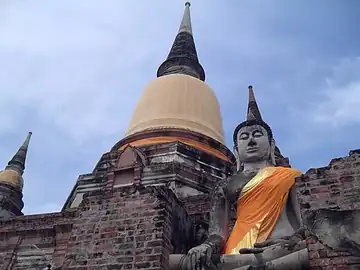 Wat Yai Chai Mongkhon Map
Wat Yai Chai Mongkhon, built in 1357 as Wat Pa Kaeo and tied to the story of what happened after the elephant-duel war.
- 15:3016
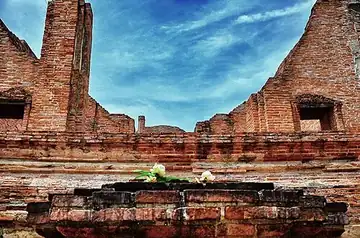 Wat Maheyong Map
Head north to Wat Maheyong to see the large ruins on the eastern side of the city island.
- 16:15Khanom Mho Kaeng Mae Yai, Phai Ling Branch (ขนมหม้อแกงแม่ยาย สาขาไผ่ลิง)
Stop at Khanom Mho Kaeng Mae Yai to buy Thai sweets to take home. The shop is open until 18:00.
- 16:45Ayothaya Floating Market (ตลาดน้ำอโยธยา)
Finish at the nearby Ayothaya Floating Market: stroll around or take a boat ride before the market closes at around 18:00.
Day 1: The city island, from the founding of the capital to King Naresuan
The stops from morning to afternoon on day one are in the middle of the island, no more than about 1–2 km apart, so you can cycle or walk between them. Wat Phra Si Sanphet, Wat Mahathat and Wat Ratchaburana show you the early years of the capital, while the Queen Suriyothai Chedi is the gateway to the era of King Naresuan.
The evening needs a vehicle, because Wat Chaiwatthanaram is on the other side of the Chao Phraya River. From the Queen Suriyothai Chedi you have to drive round and over the bridge, which takes about 10 minutes. The temple was built just one reign before King Narai's, so on the map it is the bridge from the Naresuan era to the Narai era.
Day 2: Off the island – the foreign settlements and the temples on the east side
Day two loops around the outside of the island anticlockwise, from Chandra Kasem Palace to Wat Phanan Choeng, then along the south bank of the Chao Phraya River past Baan Hollanda, the Japanese Village and the Portuguese Settlement, each about 1 km apart. In the afternoon you go to Wat Yai Chai Mongkhon and the group of temples on the east side. The total driving distance for the day is around 20 km.
The foreign settlements south of the island tell the story of the traders and foreign volunteer soldiers who came here from before King Naresuan's time through to the reign of King Narai, the period when trade and diplomacy with other nations reached their height.
Reading 1767 in the ruins
When the capital fell in 1767, the city was burned and abandoned. Fire-blackened bricks, building foundations reduced to bare outlines and damaged Buddha images are traces you can see at almost every stop on this trip.
But the city did not stop in that year. Chandra Kasem Palace was rebuilt in the reign of King Rama IV, people still come to pay their respects at Wat Phanan Choeng every day, and the Historical Park became a UNESCO World Heritage Site in 1991, which is the "today" era on the map.
Where to stay and timing
Staying on the city island or by the river around it is the most convenient, because day one ends on the west side and day two starts in the northeast corner of the island. Most historic sites close before dark, so schedule the places you want to go inside for before late afternoon, and keep the evenings for the sunset and dinner.
Tips
- Many eateries close one day a week; Pa Lek Boat Noodles, for example, is closed on Wednesdays. Check the days before you set out.
- Ayothaya Floating Market has more stalls open on Saturdays, Sundays and public holidays.
- Dress modestly when entering temples, and do not climb on chedi bases or the walls of the ruins.
- Carry drinking water, a hat and an umbrella, because almost every stop is out in the open.
- If you have no car, rent a bicycle for day one and hire a tuk-tuk for day two, when the sights are further apart.
Frequently asked questions
Where should I stay for a 2-day, 1-night trip to Ayutthaya?
Staying on the city island or by the river around it is the most convenient, because almost all of day one's stops are on the island, and day two begins at Hua Ro Market and Chandra Kasem Palace in the island's northeast corner.
Where on this trip can you see the five eras on the map?
The founding of the capital can be seen at Wat Phra Si Sanphet, Wat Mahathat and Wat Phanan Choeng; the King Naresuan era at the Queen Suriyothai Chedi, Chandra Kasem Palace and Wat Yai Chai Mongkhon; the era of trade with foreigners at Baan Hollanda, the Japanese Village and the Portuguese Settlement; and the traces of 1767 can be seen at almost every stop.
Can I follow this plan without my own car?
Yes. On day one a bicycle or a tuk-tuk works comfortably. On day two the sights are further apart, so we recommend hiring a tuk-tuk for half a day or a full day, and agreeing on the route and price in advance.
Last updated 10 November 2026