Baan Hollanda, Ayutthaya: Site of the Dutch East India Company (VOC) Trading Post
Baan Hollanda is a historical information centre on the Chao Phraya River, south of Ayutthaya's city island, built on the site of the trading post of the Dutch East India Company, or VOC. Its story begins in 1604, when Dutch merchants were received in audience by King Naresuan, and it continues for more than 160 years, up to the eve of the second fall of Ayutthaya.
This place through the eras
There were no Dutch in Ayutthaya yet.
In 1604 the first two merchants of the Dutch East India Company (VOC) arrived in Ayutthaya and were received by Naresuan, the beginning of Thai–Dutch relations. Their first trading post was inside the city walls; the Dutch were granted this riverside land later, around 1633–1634.
The VOC trading post here was large, shipping goods such as deerskins and sappanwood for sale in Japan.
The VOC withdrew from Ayutthaya in late 1765, a little over a year before the city fell.
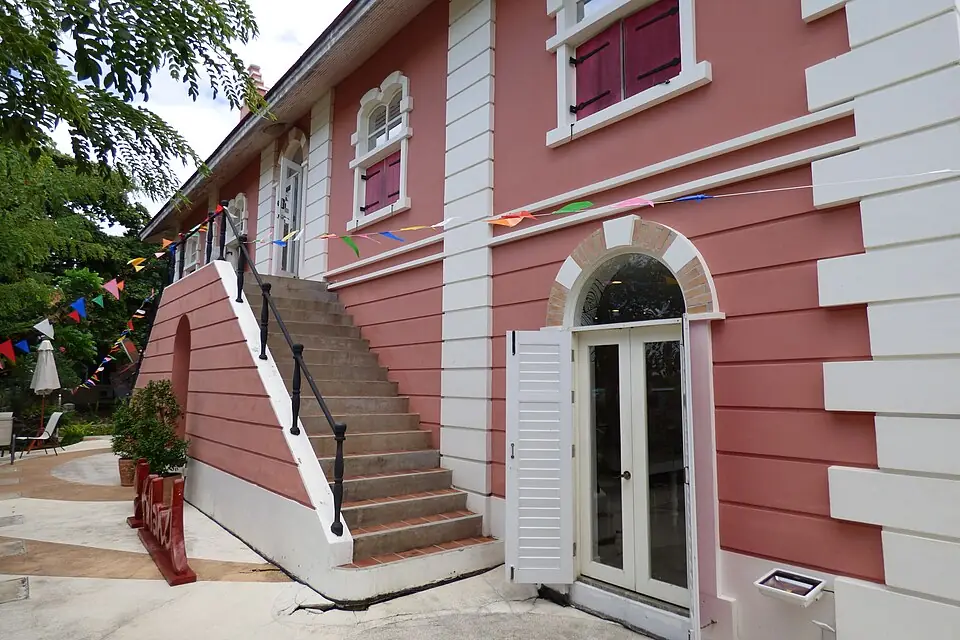
A Thai–Dutch historical information centre, built beside the foundations of the old trading post excavated by the Fine Arts Department.
The Dutch arrive in Ayutthaya in King Naresuan's reign
Around the turn of the 17th century, the Dutch had only just begun sailing to Asia to trade. In 1601 Dutch ships reached Pattani to buy pepper, and then in 1604 Cornelis Specx and Lambert Jacobsz Heyn travelled up to Ayutthaya and were received in audience by King Naresuan.
In the following reign, King Ekathotsarot gave the VOC permission to set up its first trading post inside the city walls in 1608. According to Thailand's Ministry of Foreign Affairs, the Ayutthaya court sent envoys to the Netherlands in 1609, and the two sides concluded their first treaty on 12 June 1617.
Although Naresuan died before the first trading post was established, the audience of 1604 marks the beginning of Thai–Dutch relations, which are still commemorated today.
The riverside trading post
The old warehouse inside the city was small, its roof leaked, and it was far from the river. So around 1633, King Prasat Thong granted the Dutch riverside land outside the city island. According to the Embassy of the Netherlands, this was a reward for the Dutch having sent ships to help in the war against Pattani.
The VOC sent Joost Schouten to oversee the building of a fireproof brick warehouse, completed around 1636. At that time brick buildings in Ayutthaya were usually only temples and palaces, so this trading post stood out strikingly.
In 1655 Gijsbert Heeck described the main building as being of brick, with woodwork of teak and a roof of Siamese-style tiles. It had a dining room and quarters for the head of the post, and was surrounded by a moat and a bamboo fence, with a landing stage, stables, a garden and a cemetery.
Trade goods and conflict
The main goods the Dutch bought in Ayutthaya were deerskins, stingray skins and sappanwood, most of which were shipped on to Japan in exchange for silver and copper. Later the Dutch held a monopoly on the trade in animal hides and tin at certain periods, and also bought tin, sappanwood and ivory from southern provincial towns such as Nakhon Si Thammarat.
Relations did not always run smoothly. In 1636 came what is known as the "Dutch picnic crisis": after VOC staff went out on an excursion, trouble broke out, and two Dutchmen were sentenced to be trampled to death by elephants, until the head of the trading post had to pay for their release.
In the reign of King Narai, around 1663–1664, the VOC sent ships to blockade the mouth of the Chao Phraya River to put pressure on the court after a dispute over merchant ships. The episode ended with the treaty of 1664, which granted the Dutch special trading privileges.
This spot through the eras
This point on the map tells the story of the global trade that flowed through Ayutthaya, from before the Europeans arrived to the day only brick foundations were left.
- Founding of the city (1351–1488): there were no Europeans in Ayutthaya yet. This was riverside land south of the city island, near Wat Phanan Choeng.
- Naresuan's era (1548–1605): the Dutch arrived and were received by King Naresuan in 1604, but there was no trading post at this spot yet.
- King Narai's era (1656–1688): the riverside trading post was in full swing. This was the period when Dutch commercial influence was at its height, and it saw the blockade of the river mouth and the treaty of 1664.
- Second fall of Ayutthaya (1767): the last VOC ship left in November 1765. During the final phase of the war before the city fell, the trading post was seized, looted and destroyed.
- Today: what remains are the excavated brick foundations, a memorial, and the Baan Hollanda information centre, which opened in 2013.
From brick ruins to the Baan Hollanda information centre
The Fine Arts Department registered the area as a historic site in 1938, and a brick memorial with a bronze plaque was unveiled on 19 August 1956, but no systematic excavation had yet taken place.
The Fine Arts Department's major excavation took place in 2003–2005, marking 400 years of Thai–Dutch relations, and uncovered the foundations of 3 brick buildings. Digging resumed in 2008–2009 with the support of the Dutch government, revealing a fourth building along with clay tobacco pipes, glassware, coins and ceramics.
The two-storey main building, about 12.5 x 45 metres, could only be partly excavated, because most of it lies beneath a neighbouring private shipyard. Today's site of about 1.3 rai (roughly 2,000 square metres) is only around one-tenth of the original VOC land.
The information centre was completed in 2011 and opened to visitors on 3 April 2013, funded by Queen Beatrix of the Netherlands and the Dutch government. The exhibition was developed by Thai historians together with museums in Thailand and the Netherlands.
Visiting
Inside are exhibitions on the VOC in Siam, reproductions of 17th- and 18th-century European maps, replicas of artefacts such as coins and ceramics, and 17th-century-style household objects. The front of the building faces the river in Dutch style, and you can walk around the excavated foundations.
Baan Hollanda is not far from Wat Phanan Choeng, so the two make an easy half-day together. Or combine them with the Portuguese Settlement and the Japanese Settlement (Japanese Village) south of the city island to see the story of Ayutthaya's foreign communities in a single trip.
Where historians still disagree
- The year the riverside land was granted: some sources say King Prasat Thong granted the land in 1633, while many others give 1634. The start and completion dates of construction, and the planned building size versus the size recorded later, also do not entirely agree.
- The year of the VOC's river blockade: some sources say 1663, while many tie the event to 1664, the year of the treaty.
- The end of the VOC in Ayutthaya: some sources take 1765, when the last ship left, while the memorial plaque uses the span 1634–1767, counting up to the fall of the city.
Visiting information
- Opening hours: Wednesday–Sunday, 9:00 am–4:00 pm; closed Mondays and Tuesdays (as of 2026)
- Admission: THB 50 for foreign visitors (as of 2025–2026)
- Allow about 45 minutes to an hour.
- It is closed on Mondays and Tuesdays; check for special holidays before you go.
- It is an easy walk on to nearby Wat Phanan Choeng.
- Visit the old building foundations outside in the morning, when it is not too hot.
Opening hours and admission fees may change, so please check before you go.
Frequently asked questions
What is Baan Hollanda?
It is an information centre on the history of Thai–Dutch relations, built on the site of the VOC trading post on the Chao Phraya River. It opened in 2013.
How are the Dutch connected with King Naresuan?
In 1604 the first party of Dutch merchants reached Ayutthaya and was received in audience by King Naresuan, before King Ekathotsarot gave permission to set up a trading post in 1608.
What did the Dutch buy from Ayutthaya?
The main goods were deerskins, stingray skins and sappanwood, which were shipped on to be sold in Japan, as well as tin and ivory from the southern provincial towns.
When is Baan Hollanda open?
As of 2026 it opens Wednesday to Sunday, 9:00 am–4:00 pm, and is closed on Mondays and Tuesdays. Check again before you go.
- THE DUTCH SETTLEMENT - Ayutthaya Historical Research
- BAAN HOLLANDA - Ayutthaya Historical Research
- Beginning of Relations with European Nations - Ministry of Foreign Affairs of Thailand
- Dutch history in Thailand - Embassy of the Netherlands
- Baan Hollanda Thailand - ASEF Culture360
- Baan Hollanda - Thai Holiday Guide
Last updated 10 November 2026