Home › History › Prasat Thong dynasty
The Prasat Thong Dynasty: When Ayutthaya Opened Up to the World
The Prasat Thong dynasty ruled Ayutthaya from 1629 to 1688 and produced four kings. It began with a nobleman who seized power and made himself king, and ended with King Narai the Great, who made Ayutthaya's name known as far away as the French court. This was the period in which Ayutthaya had its widest contacts with the outside world.
Kings of the dynasty (1629–1688)
| No. | King | Reign | Key events |
|---|---|---|---|
| 24 | King Prasat Thong | 1629–1656 | A nobleman who seized power and took the throne. He had Wat Chaiwatthanaram built, crushed the Japanese community and allowed the Dutch to choose a site for their trading post. |
| 25 | King Chao Fa Chai | 1656 | Eldest son of King Prasat Thong. Soon after coming to the throne he was overthrown and executed by Si Suthammaracha and Narai. |
| 26 | King Si Suthammaracha | 1656 (about 2 months) | Younger brother of King Prasat Thong. After about two months on the throne he was overthrown by Narai. |
| 27 | King Narai the Great | 1656–1688 | Lived at Chandra Kasem Palace before becoming king, used Lopburi as a second royal residence and exchanged embassies with France. |
The nobleman who became king
King Prasat Thong was born around 1599. As a young man he spent several years in prison, but King Songtham pardoned him and promoted him until he became Chao Phraya Kalahom Suriyawong, the most important military commander at court.
After King Songtham died, he seized the palace, had King Chetthathirat executed, placed King Athittayawong on the throne for a short time, and then took the throne himself in 1629. Accounts of his origins vary. The traditional Thai belief is that he was a son of King Ekathotsarot, but van Vliet recorded something different.
The reign of King Prasat Thong (1629–1656)
In 1630 he had Wat Chaiwatthanaram built on the west bank of the Chao Phraya River, on a site believed to have been his mother's home. Its central prang, surrounded by corner prangs, reflects the return of the Khmer-style prang (tower) in late Ayutthaya art. He also built Wat Chumphon Nikayaram and a palace at Bang Pa-in.
In foreign affairs, in 1630 he crushed the forces of the Japanese community and drove Yamada Nagamasa from the court, and many Japanese had to leave Ayutthaya. The Dutch, on the other hand, were allowed to choose a site for their trading post in 1634. Jeremias van Vliet, an employee of the VOC, wrote accounts of Ayutthaya during this reign that historians still rely on today.
One year, three reigns (1656)
When King Prasat Thong died, his eldest son, King Chao Fa Chai, came to the throne, but he was overthrown by his uncle, King Si Suthammaracha, acting together with Narai. About two months later Narai in turn seized power from his uncle and took the throne in 1656. The list of kings therefore records three reigns in the year 1656.
King Narai the Great (1656–1688)
Before becoming king, Narai had lived at Chandra Kasem Palace. Once on the throne, he revived the town of Lopburi and in 1666 had a palace built there as a residence and a place to receive foreign envoys, so that Lopburi became second in importance only to Ayutthaya.
In this reign Ayutthaya had wide-ranging contacts with other nations, including the Dutch, the English, the Persians and the French. The Dutch obtained a trade treaty in 1664. Constantine Phaulkon, a foreigner, rose to become a leading official. An embassy from Louis XIV arrived in 1685, and a Siamese embassy led by Kosa Pan was received at the Palace of Versailles on 1 September 1686.
The following year France sent troops to garrison the fort at Bangkok, and resentment of foreign influence grew among the nobility.
The revolution of 1688 and the end of the dynasty
In early 1688 King Narai fell gravely ill at Lopburi. Phetracha, head of the Royal Elephant Department and one of the king's close associates, seized power in May, and Phaulkon was arrested and executed. King Narai died at Lopburi in July 1688, and Phetracha took the throne in August, bringing the Prasat Thong dynasty to an end.
Traces of the Prasat Thong dynasty you can visit
The traces of this period include both great royal temples and the foreign communities along the river.
- Wat Chaiwatthanaram: built in 1630, in the reign of King Prasat Thong
- The Japanese Settlement: the community that was crushed in 1630
- Baan Hollanda: the VOC trading post, which was granted its land in this reign
- Chandra Kasem Palace: King Narai's residence before he came to the throne
- Outside Ayutthaya: Phra Narai Ratchaniwet (King Narai's Palace) in Lopburi
Where historians still disagree
- King Prasat Thong's origins: the traditional Thai belief is that he was a son of King Ekathotsarot by a mother who was not a queen, while van Vliet recorded that he was a relative of King Songtham on his mother's side.
- The year of King Prasat Thong's death: the Thai list of kings uses BE 2199 (1656), while some sources give August 1655.
- Why Wat Chaiwatthanaram was built: the Fine Arts Department's information stresses that it was built on the former home of the king's mother; some sources say it was his foster mother; and Prince Damrong Rajanubhab suggested that it commemorated a victory over Cambodia.
- King Narai's death: most evidence says he was gravely ill, but some sources suspect he may have been poisoned, and the date is given variously as 10 or 11 July 1688.
Historic sites from this era on the map
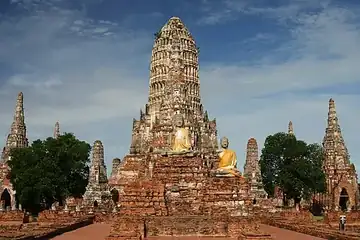 TempleWat ChaiwatthanaramKing Prasat Thong's riverside temple on the Chao Phraya, built 25 years after Naresuan's death
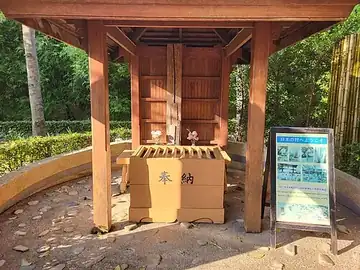 Foreign settlementJapanese Village★Site of the Japanese community on the Chao Phraya: traders and volunteer soldiers who began to appear in the late years of Naresuan's era
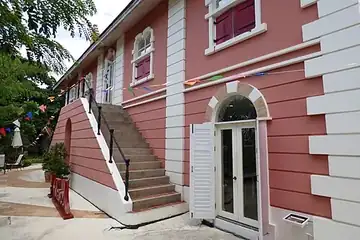 Foreign settlementBaan Hollanda★Site of the Dutch trading post, a relationship that began when VOC merchants were received by Naresuan
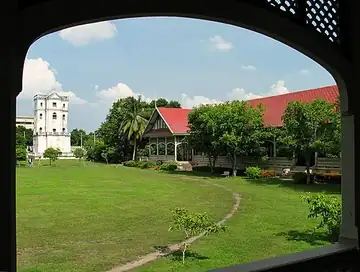 PalaceChandra Kasem Palace★The palace built as King Naresuan's residence, and his command post for defending the capital
Frequently asked questions
How many kings did the Prasat Thong dynasty have?
Four: King Prasat Thong, King Chao Fa Chai, King Si Suthammaracha and King Narai the Great.
When was Wat Chaiwatthanaram built?
In 1630, in the reign of King Prasat Thong, the first king of the Prasat Thong dynasty.
What was King Narai's relationship with France?
He exchanged embassies with Louis XIV: a French embassy arrived in 1685, and a Siamese embassy led by Kosa Pan was received at Versailles in 1686.
Last updated 10 November 2026