Home › History › Sukhothai (Phra Ruang) dynasty
The Sukhothai (Phra Ruang) Dynasty: The Royal House of King Naresuan
The Sukhothai dynasty, also called the Phra Ruang dynasty, ruled Ayutthaya from 1569 to 1629. It produced seven kings and was the royal house of King Naresuan the Great. Its story begins with Ayutthaya as a vassal of Hanthawaddy, moves on through the recovery of independence to a flourishing age of international trade, and ends in a struggle for the throne.
Kings of the dynasty (1569–1629)
| No. | King | Reign | Key events |
|---|---|---|---|
| 17 | King Maha Thammaracha | 1569–1590 | Formerly Khun Phirenthorathep, of Phra Ruang descent. He ruled Ayutthaya as a vassal of Hanthawaddy and had Chandra Kasem Palace built as Naresuan's residence. |
| 18 | King Naresuan the Great | 1590–1605 | Declared independence in 1584, won the elephant duel of 1593, and died at Mueang Hang while leading an army toward Ava. |
| 19 | King Ekathotsarot | 1605–1610 | Concentrated on running the kingdom and on trade, sent an embassy as far as Holland, and, according to the Fine Arts Department's sign, built Wat Worachettharam. |
| 20 | King Si Saowaphak | 1610–1611 | Son of King Ekathotsarot. He reigned for little more than a year before he was killed; his reign dates vary from source to source. |
| 21 | King Songtham | 1611–1628 | In his reign a Buddha footprint was discovered in Saraburi, the Japanese played a role at court, and a treaty was made with the Dutch. |
| 22 | King Chetthathirat | 1628–1629 | Son of King Songtham. He was overthrown by Okya Si Worawong and executed at Wat Khok Phraya. |
| 23 | King Athittayawong | 1629 (about 36 days) | Came to the throne as a child and was deposed after about 36 days, bringing the Sukhothai dynasty to a close. |
A noble of Phra Ruang descent from Phitsanulok
The first king of this dynasty was King Maha Thammaracha, formerly Khun Phirenthorathep, a descendant of the Phra Ruang dynasty of Sukhothai. In 1548 he and a group of nobles did away with Khun Worawongsathirat and invited King Maha Chakkraphat to take the throne. In return he was given Phitsanulok to govern and was married to the king's daughter, Princess Wisutkasat.
In the War of the White Elephants, Phitsanulok was besieged until it ran out of food and smallpox broke out, so Maha Thammaracha submitted to King Bayinnaung, and his son Naresuan was taken to Hanthawaddy. When Ayutthaya fell in 1569, King Bayinnaung installed him as king of Ayutthaya, ruling as a vassal.
Fifteen years as a vassal state (1569–1584)
Although Ayutthaya was a dependency of Hanthawaddy, the court gradually regained its strength. Naresuan returned and, around 1571, was appointed Maha Uparat (viceroy and heir) with Phitsanulok as his seat. During this period Ayutthaya had to fend off Khmer armies several times; on one occasion, in 1570, they even laid siege to the capital.
Around 1577 King Maha Thammaracha had Chandra Kasem Palace built as a residence for Naresuan, and in 1580 he had the city walls extended out to the riverbank. The palace later served as a command post when Hanthawaddy's army besieged the capital in 1586.
King Naresuan and the recovery of independence (in brief)
In 1584 Naresuan declared independence at Mueang Khraeng, and he held off Hanthawaddy's armies every time, including the siege of 1586–1587, when King Nanda Bayin came in person to besiege the capital. When King Maha Thammaracha died in 1590, Naresuan came to the throne.
After the elephant duel of 1593, Ayutthaya went on the offensive, sending armies both to the west and into Cambodia, and in 1604 the king received the Dutch at his court. He died at Mueang Hang on 25 April 1605 while leading an army toward Ava. His full life story can be read on the King Naresuan page.
King Ekathotsarot: peace at home and growing trade (1605–1610)
King Ekathotsarot, Naresuan's younger brother, who had fought beside him in almost every campaign, succeeded him. His reign focused on running the kingdom rather than on war: a survey of manpower was carried out across the realm, and more tax was raised from the growing trade. According to the Fine Arts Department's sign, he had Wat Worachettharam built on the site where his elder brother was cremated.
Foreign trade expanded quickly. The Dutch set up a trading post in Ayutthaya, and a Siamese embassy reached The Hague and met Prince Maurice of Nassau in 1608. The court had units of foreign volunteers, including Japanese, and exchanged royal letters with the Japanese shogunate.
Late in the reign, Prince Suthat, the king's son who had just been appointed Maha Uparat, died suddenly, and political instability began to return.
The end of the dynasty: King Songtham and the struggle for the throne
King Si Saowaphak, another of the king's sons, reigned for little more than a year before he was killed. Then a prince who had spent several years as a monk came to the throne as King Songtham (r. 1611–1628). His reign is known for its religious works: a Buddha footprint was discovered in Saraburi and Wat Phra Phutthabat was built there. Japanese under Yamada Nagamasa played a role at court, and a treaty was made with the Dutch in 1617.
When King Songtham died at the end of 1628, his son King Chetthathirat came to the throne, but Okya Si Worawong, a powerful noble, seized the palace and had him executed at Wat Khok Phraya in 1629. He then placed the young King Athittayawong on the throne for about 36 days before taking the throne himself as King Prasat Thong, and so the Sukhothai dynasty came to an end.
Traces of the Sukhothai dynasty you can visit
Most of the places in Ayutthaya connected with this dynasty are tied to the story of King Naresuan.
- Chandra Kasem Palace: the palace built as Naresuan's residence
- The Ancient Royal Palace: Naresuan's residence throughout his reign
- Wat Yai Chai Mongkhon: where Somdet Phra Phonnarat asked the king to pardon his generals after the elephant duel
- Wat Worachettharam, Wat Worachet Thep Bamrung and Wat Sop Sawan: the three sites proposed as the place where Naresuan was cremated
- Baan Hollanda and the Japanese Settlement: foreign communities that grew up under this dynasty
- The King Naresuan Monument at Phu Khao Thong Field, and the elephant-duel murals at Wat Suwan Dararam
Where historians still disagree
- When King Ekathotsarot's reign ended: current textbooks and research based on contemporary Dutch documents give 1610, but many older books extend it to 1620, which also shifts the reign dates of King Si Saowaphak and King Songtham.
- How King Songtham came to the throne: the sources tell it differently. Some say the nobles invited him to leave the monkhood and become king; others say he seized the throne. Accounts also disagree about who killed King Si Saowaphak.
- The death of Prince Suthat: it is said that he took poison after displeasing his father, but some sources think he may have been poisoned by someone else.
- Where King Naresuan was cremated: Wat Worachettharam on the city island, Wat Worachet Thep Bamrung off the island and Wat Sop Sawan have all been proposed, and there is still no conclusive evidence.
- Was the elephant duel a formal, ceremonial challenge? The Thai royal chronicles describe a duel fought on elephant-back, while some Burmese and European sources say the Burmese Crown Prince was killed by gunfire.
Historic sites from this era on the map
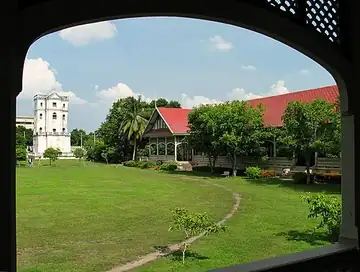 PalaceChandra Kasem Palace★The palace built as King Naresuan's residence, and his command post for defending the capital
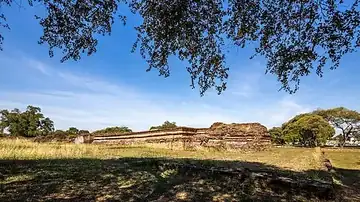 PalaceAncient Royal Palace★The centre of power in Ayutthaya, where Naresuan came to the throne
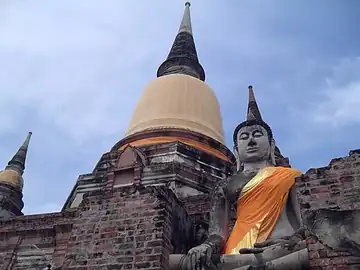 TempleWat Yai Chai Mongkhon★King U Thong's Wat Pa Kaeo, with the Chai Mongkhon chedi linked to the elephant duel
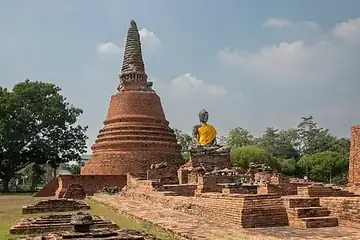 TempleWat Worachettharam★The temple believed to have been built where King Naresuan was cremated
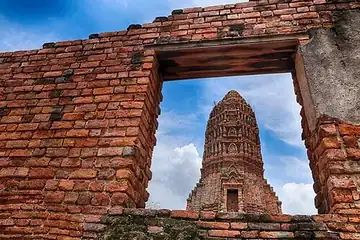 TempleWat Worachet (outside the island)★A great prang in the middle of Thung Prachet, and one of the temples that may have been King Naresuan's cremation siteTempleWat Sop Sawan★A temple born of Queen Suriyothai's funeral, and one of the places where King Naresuan may have been cremated.
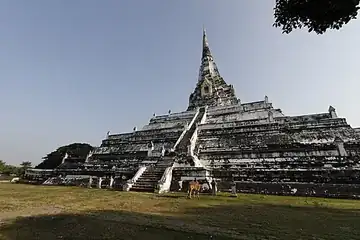 TempleWat Phu Khao Thong★The chedi King Bayinnaung built after the first fall of Ayutthaya, in the middle of a former battlefield
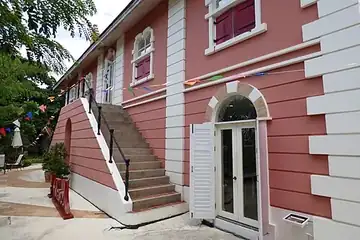 Foreign settlementBaan Hollanda★Site of the Dutch trading post, a relationship that began when VOC merchants were received by Naresuan
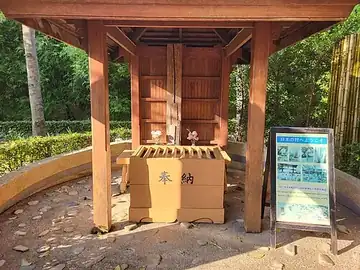 Foreign settlementJapanese Village★Site of the Japanese community on the Chao Phraya: traders and volunteer soldiers who began to appear in the late years of Naresuan's era
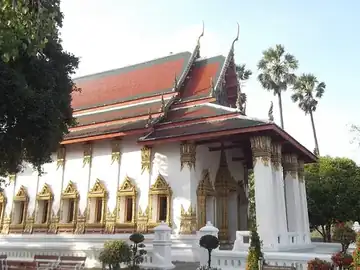 TempleWat Suwan Dararam★The temple of the Chakri dynasty's ancestors, whose wihan walls are painted with the life of King Naresuan and the elephant duel
Frequently asked questions
Which dynasty did King Naresuan belong to?
The Sukhothai dynasty, also called the Phra Ruang dynasty, whose first king was his father, King Maha Thammaracha.
How many kings did the Sukhothai dynasty have?
Seven: Maha Thammaracha, Naresuan, Ekathotsarot, Si Saowaphak, Songtham, Chetthathirat and Athittayawong.
Why is it called the Sukhothai dynasty when it ruled Ayutthaya?
Because its first king, King Maha Thammaracha, was descended from the Phra Ruang dynasty of Sukhothai — which is also why it is known as the Phra Ruang dynasty.
- Maha Thammaracha (king of Ayutthaya) - Wikipedia
- History of Ayutthaya - Historical Events - Timeline 1600-1649
- An Analysis of the Economy and Politics of Ayutthaya in the Reign of King Ekathotsarot (1605–1610) - Journal of Ayutthaya Studies (in Thai)
- Sanpet III (Ekathotsarot) - Wikipedia (IPFS mirror)
- Songtham - Wikiwand
- History of Ayutthaya - Historical Events - Timeline 1550-1599
Last updated 10 November 2026