Home › History › Ban Phlu Luang dynasty
The Ban Phlu Luang Dynasty: The Last Royal House of Ayutthaya
The Ban Phlu Luang dynasty was the last royal house of Ayutthaya, reigning from 1688 to 1767 and producing six kings. In its early decades the kingdom was fairly peaceful, trade with China flourished and many important temples were restored. But struggles over the throne weakened the kingdom, until Ayutthaya fell for the second time in 1767.
Kings of the dynasty (1688–1767)
| No. | King | Reign | Key events |
|---|---|---|---|
| 28 | King Phetracha | 1688–1703 | Born at Ban Phlu Luang in Suphan Buri and formerly head of the Royal Elephant Department, he seized power at the end of King Narai's reign and forced the French troops to withdraw from Bangkok. |
| 29 | King Suea (Sanphet VIII) | 1703–1708 | Began digging the Khok Kham canal and restored the Phra Mongkhon Bophit image after it was struck by lightning. |
| 30 | King Thai Sa (Sanphet IX) | 1708–1733 | Finished digging the Mahachai canal and restored Wat Maheyong; his younger brother restored Wat Kudi Dao during this reign. |
| 31 | King Borommakot | 1733–1758 | The last peaceful period of Ayutthaya. He restored many temples, such as Wat Phu Khao Thong, and sent a mission of monks to revive Buddhism in Lanka. |
| 32 | King Uthumphon | 1758 | Soon handed the throne to his elder brother and became a monk, which earned him the name Khun Luang Ha Wat. He was carried off to Burma after the fall of the city. |
| 33 | King Ekkathat | 1758–1767 | His reign faced King Alaungpaya's army in 1760 and ended with the fall of Ayutthaya to King Hsinbyushin's armies in 1767. |
King Phetracha: from Ban Phlu Luang to the throne
King Phetracha was born in 1632 at Ban Phlu Luang in Suphan Buri. His mother was King Narai's wet nurse, so he grew up close to Narai from childhood. He later became head of the Royal Elephant Department, in charge of the royal elephants.
After seizing power and taking the throne in 1688, he besieged the fort at Bangkok, where French troops had dug in, for about four months, until the French were forced to withdraw. Relations with the Western powers shrank sharply, leaving the Dutch as the main partner, but trade with Asian nations remained lively. His reign had to put down several rebellions, such as the Thammathian revolt, and to deal with the governors of Nakhon Ratchasima and Nakhon Si Thammarat, who refused to submit.
King Suea and King Thai Sa
When King Phetracha died in 1703, King Sanphet VIII, better known as King Suea, came to the throne. The chronicles describe him as fierce by nature. In his reign work began on digging the Khok Kham canal to shorten the boat route, and the Phra Mongkhon Bophit image was restored after being struck by lightning, with the mondop (square shrine) that covered it replaced by a wihan (assembly hall).
King Sanphet IX, or King Thai Sa (r. 1708–1733), finished digging the canal, which later became known as the Mahachai canal, and restored Wat Maheyong between 1709 and 1713. His younger brother, who later became King Borommakot, restored Wat Kudi Dao in the same reign.
King Borommakot: the last period of peace
After King Thai Sa died, fighting broke out over the throne between his younger brother and his son. The brother won and took the throne as King Borommakot in 1733. His reign lasted about 25 years and is often described as Ayutthaya's last period of peace.
He restored a great many temples, such as Wat Phu Khao Thong in 1744 and Wihan Phra Mongkhon Bophit. Art and literature flourished; his son, Prince Thammathibet, is a poet well known to Thais. In 1752 a mission of Thai monks led by Phra Ubali travelled to Lanka at the request of the Lankan king and ordained Sri Lankan monks, giving rise to the order known as the Siam Nikaya.
The hidden problem was the succession. Prince Thammathibet was punished by royal order and died as a result, and the king later appointed Prince Uthumphon as Maha Uparat (heir), passing over his elder brother, Prince Ekkathat.
King Uthumphon and King Ekkathat
When King Borommakot died in 1758, King Uthumphon came to the throne but soon handed it to his elder brother, King Ekkathat, and left to become a monk at Wat Pradu. People therefore called him Khun Luang Ha Wat, “the king who sought the temple”.
In 1760 King Alaungpaya's army reached the outskirts of the capital, and Khun Luang Ha Wat left the monkhood to help command the city's defence. The Burmese set up cannon at Wat Na Phra Men and fired into the city, but before long they had to retreat, and King Alaungpaya died on the way back. King Uthumphon then returned to the monkhood.
The second fall of Ayutthaya
In 1765 King Hsinbyushin sent two armies: a northern army led by Ne Myo Thihapate and a southern army from Tavoy led by Maha Nawrahta. The two armies joined up and besieged the capital for about 14 months. The Burmese dug tunnels to undermine the city walls, and the city fell on 7 April 1767.
The palaces and temples were burned and their riches looted. Around 30,000 people, including members of the royal family and skilled craftsmen, were carried off to Burma. Khun Luang Ha Wat was among them, and he died in Burma in 1796. King Ekkathat died at the time of the city's fall.
About seven months after the fall, Phraya Tak, who had broken out through the siege before the city fell, came back to free the country and established Thonburi as the new capital.
Traces of the Ban Phlu Luang dynasty you can visit
Many of the temples you see in Ayutthaya today owe their present shape to restorations carried out under this dynasty.
- Wat Phu Khao Thong: major restoration in 1744
- Wihan Phra Mongkhon Bophit: restored in the reigns of King Suea and King Borommakot
- Wat Maheyong and Wat Kudi Dao: restored in the reign of King Thai Sa
- Wat Na Phra Men: where the Burmese army set up its cannon in 1760
- Wat Chaiwatthanaram: where members of the royal family were cremated in the reign of King Borommakot
- Wat Suwan Dararam: built in the late Ayutthaya period by the father of King Rama I
Where historians still disagree
- King Suea's father: the Phan Chanthanumat (Choem) version of the chronicles says he was Phetracha's son, but the Wat Phra Chetuphon version says he was a secret son of King Narai.
- BE years that are one year apart: Phetracha died in February 1703, which under the old reckoning of the new year (in April) would still be BE 2245, yet the usual list of kings gives BE 2246. King Suea died at the end of 1708 or early in 1709, depending on the source.
- The length of King Uthumphon's reign: some sources say about 10 days, others about one to three months.
- Why King Alaungpaya retreated and how he died: the Thai chronicles say he was injured when a cannon burst, while Burmese sources say he fell ill.
- The death of King Ekkathat: accounts differ on whether he was shot or died of starvation.
- The date of the fall: most sources give 7 April 1767, but some chronologies give 28 April.
Historic sites from this era on the map
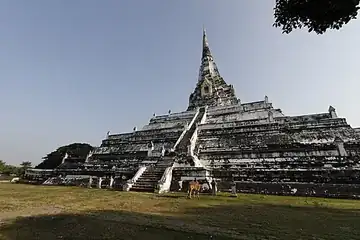 TempleWat Phu Khao Thong★The chedi King Bayinnaung built after the first fall of Ayutthaya, in the middle of a former battlefield
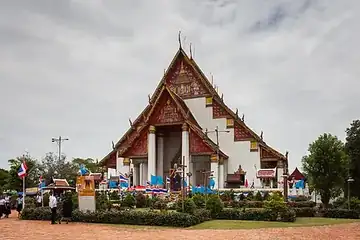 TempleWihan Phra Mongkhon BophitA seated Buddha about 9.5 metres across the lap that survived lightning and the fires of war, and is still worshipped today.
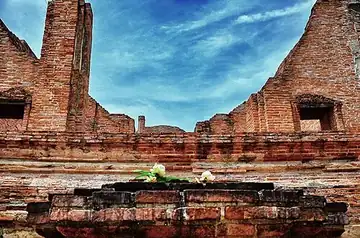 TempleWat Maheyong★A chedi ringed by some 80 elephants, and the site of King Bayinnaung's royal camp when Ayutthaya first fell in 1569
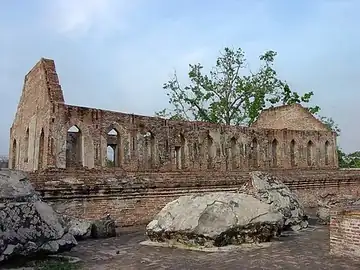 TempleWat Kudi DaoAn abandoned temple in the eastern fields, restored by King Borommakot, who was also ordained here while he was still the Front Palace prince
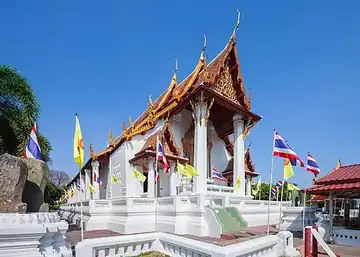 TempleWat Na Phra Men★Where the truce of the War of the White Elephant was negotiated, the start of Naresuan's journey to Hanthawaddy
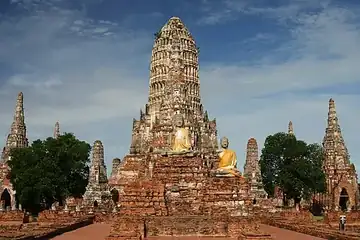 TempleWat ChaiwatthanaramKing Prasat Thong's riverside temple on the Chao Phraya, built 25 years after Naresuan's death
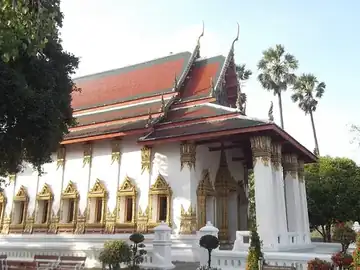 TempleWat Suwan Dararam★The temple of the Chakri dynasty's ancestors, whose wihan walls are painted with the life of King Naresuan and the elephant duel
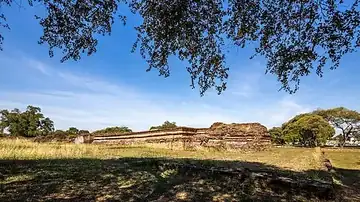 PalaceAncient Royal Palace★The centre of power in Ayutthaya, where Naresuan came to the throne
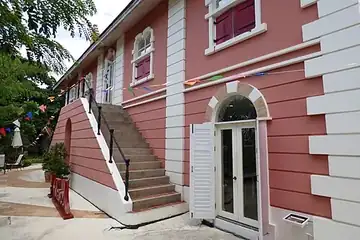 Foreign settlementBaan Hollanda★Site of the Dutch trading post, a relationship that began when VOC merchants were received by Naresuan
Frequently asked questions
How many kings did the Ban Phlu Luang dynasty have?
Six: Phetracha, Suea, Thai Sa, Borommakot, Uthumphon and Ekkathat.
Why is it called the Ban Phlu Luang dynasty?
It is named after Ban Phlu Luang in Suphan Buri, the birthplace of King Phetracha, the dynasty's first king.
Who was Khun Luang Ha Wat?
King Uthumphon, who handed the throne to his elder brother and became a monk at Wat Pradu — hence the name Khun Luang Ha Wat, “the king who sought the temple”.
On what date did Ayutthaya fall?
Most sources give 7 April 1767 (BE 2310), after the city had been besieged by King Hsinbyushin's armies for about 14 months.
Last updated 10 November 2026